II. From Victory to the Great Relaxation
The greatest consequence of the Unipolar Moment was not military dominance, economic prosperity, or even ideological confidence; it was the gradual disappearance of urgency. Throughout history, competition has imposed discipline upon societies as states operating in dangerous environments are forced to make difficult choices and invest in capabilities whose value may not become apparent for years or even decades. They maintain stockpiles, preserve industrial capacity, sustain military readiness, and accept inefficiencies that would appear irrational under normal market conditions. Competition enforces preparation because the cost of being unprepared can be catastrophic. My mother used to tell me when I was little that if you fail to plan, you eventually plan to fail.
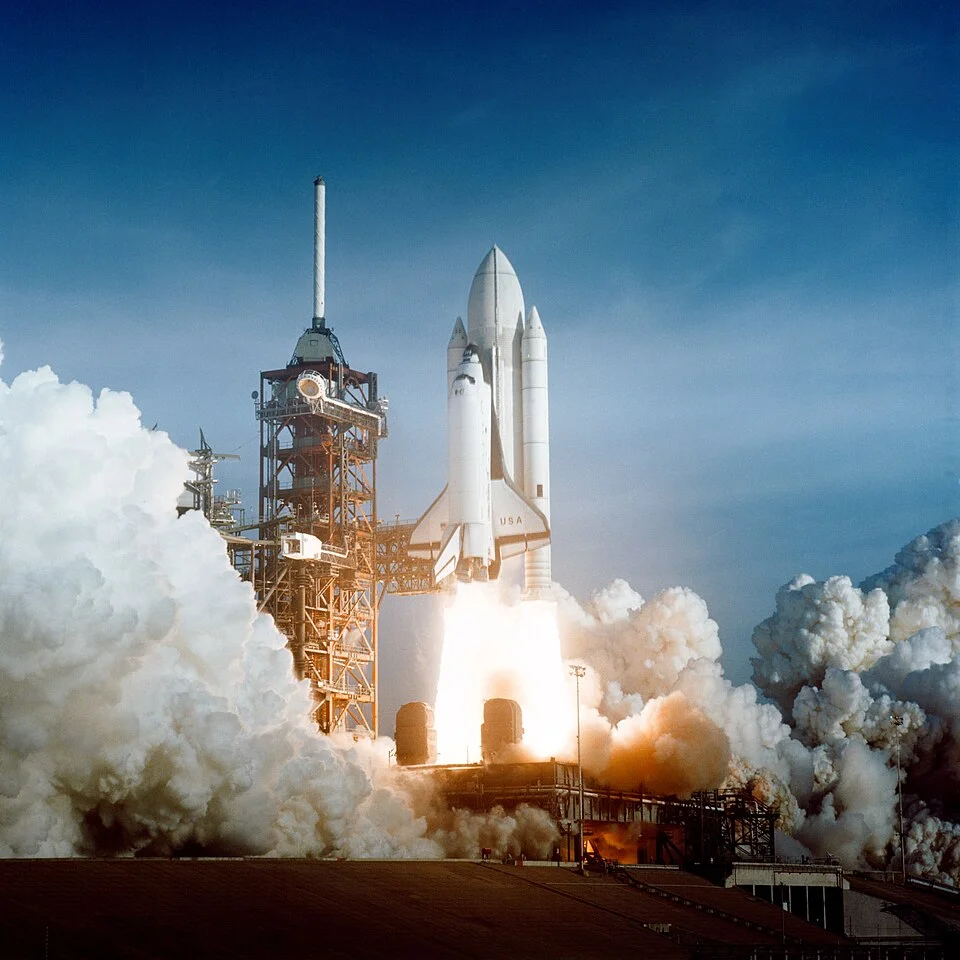
Source: NASA.
For a big part of the twentieth century, Western societies lived under these pressures, since the possibility of major conflict shaped political priorities across the industrialized world. Back then, industrial capacity was viewed not merely as an economic asset but mostly as a strategic one. Defense expenditures were justified not because war was inevitable, but because deterrence required preparation. Policymakers understood that resilience often carried costs, and they accepted those costs because the consequences of failing to do so were very clear. The experiences of two world wars and a decades-long Cold War further reinforced the belief that security required investment long before a crisis had even emerged.
The end of the Cold War altered this calculus. With the Soviet Union disappeared and no peer competition, the balance of power appeared settled. The threats that had justified decades of military expenditure and strategic planning seemed increasingly distant and for the first time in generations, Western governments found themselves operating in an environment that appeared unusually secure. As the perception of danger continued to fade, the incentives facing governments, businesses, and societies began to change.
This transformation was not the result of a single policy decision or a coordinated strategy. There was no declaration that the age of competition had ended. No government announced that resilience would become less important than efficiency, nor did corporations openly argue that strategic considerations should be subordinated to economic ones. But at the same time, across institutions and industries, decisions increasingly reflected precisely these assumptions. What emerged was not a deliberate abandonment of preparedness, but a gradual adaptation to a world in which preparedness seemed less necessary.
One of the clearest manifestations of this shift was the pursuit of what became known as the peace dividend. For nearly half a century, Western governments had devoted enormous resources to maintaining military capabilities designed to deter the Soviet Union. Once that threat disappeared, many questioned whether such expenditures were still necessary. Their argument that resources previously allocated to defense could instead be directed towards healthcare, education, infrastructure, and social programs was quite compelling. If the world had become safer, why should we continue behaving as though it had not?
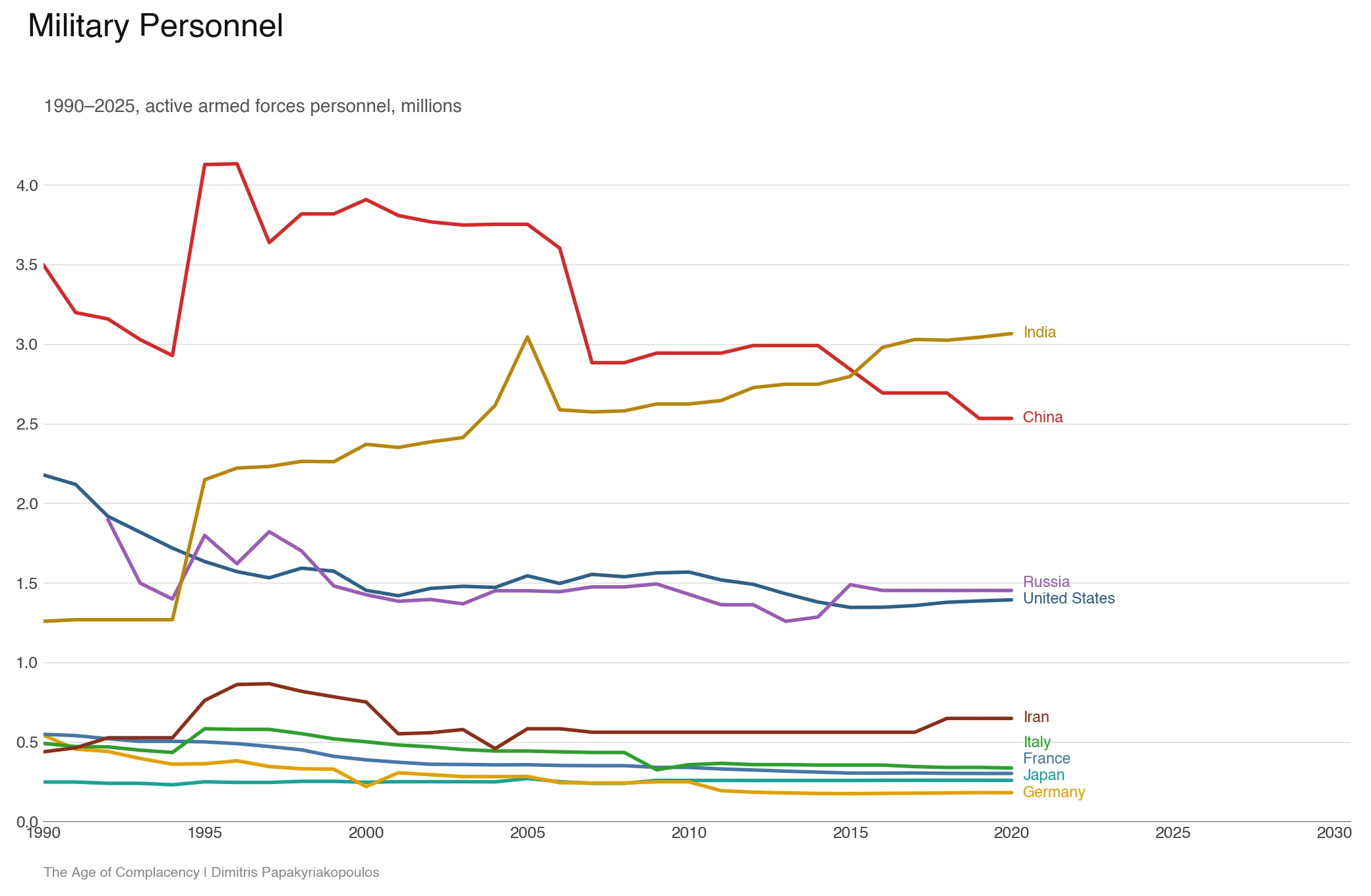
Source: The Military Balance, International Institute for Strategic Studies.
The reduction in military manpower across much of the Western world reflected this new reality. Armed forces became smaller, more professionalized, and increasingly optimized for limited interventions rather than large-scale mobilization. Governments were rationally responding to a strategic environment that appeared significantly safer than the one their predecessors had faced. Over time, however, these decisions contributed to the erosion of capabilities that previous generations had considered indispensable to national power. The same logic extended to the defense industrial base itself. In 1993, senior Pentagon officials convened the chief executives of America's largest defense contractors at a now-famous meeting that became known as the "Last Supper." The message was pretty clear that post-Cold War defense budgets would no longer support the existing industrial structure, and many firms would have to merge, consolidate, or disappear altogether. The resulting wave of consolidation dramatically reduced the number of major defense contractors and reflected a broader assumption of the era that the demands of great-power competition were receding and that the vast industrial capacity built during the Cold War was no longer necessary. At the time, these decisions appeared prudent and economically rational. In retrospect though, they also revealed how deeply and desperately the expectation of lasting peace had become embedded within the West.
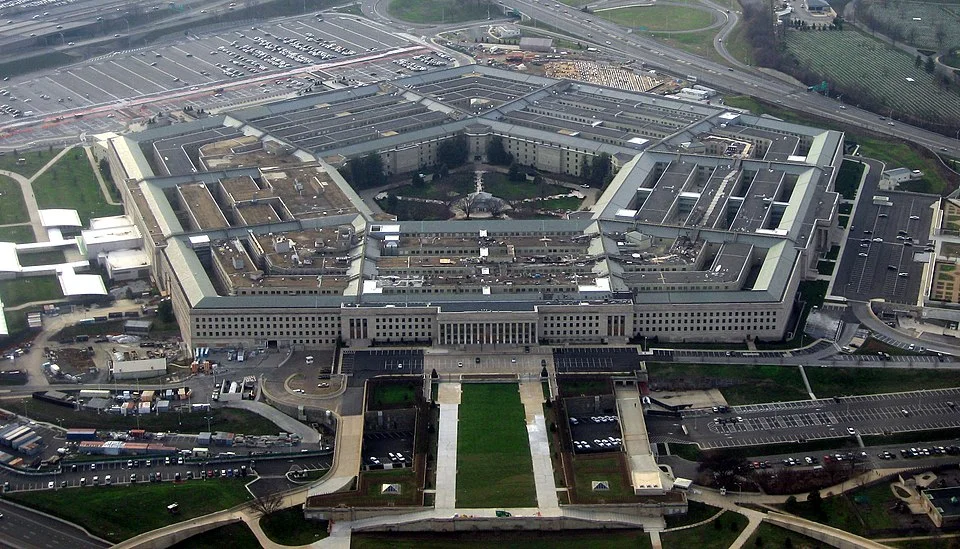
Source: The Pentagon.
The same logic extended beyond military institutions. After the 1990s, economic globalization accelerated at an extraordinary pace. Advances in transportation, communications, and information technology created opportunities for unprecedented integration, corporations reorganized themselves around global supply chains, production shifted to regions offering lower costs, inventories were reduced, redundant capacity was eliminated, and industries that had once been largely national became increasingly international.
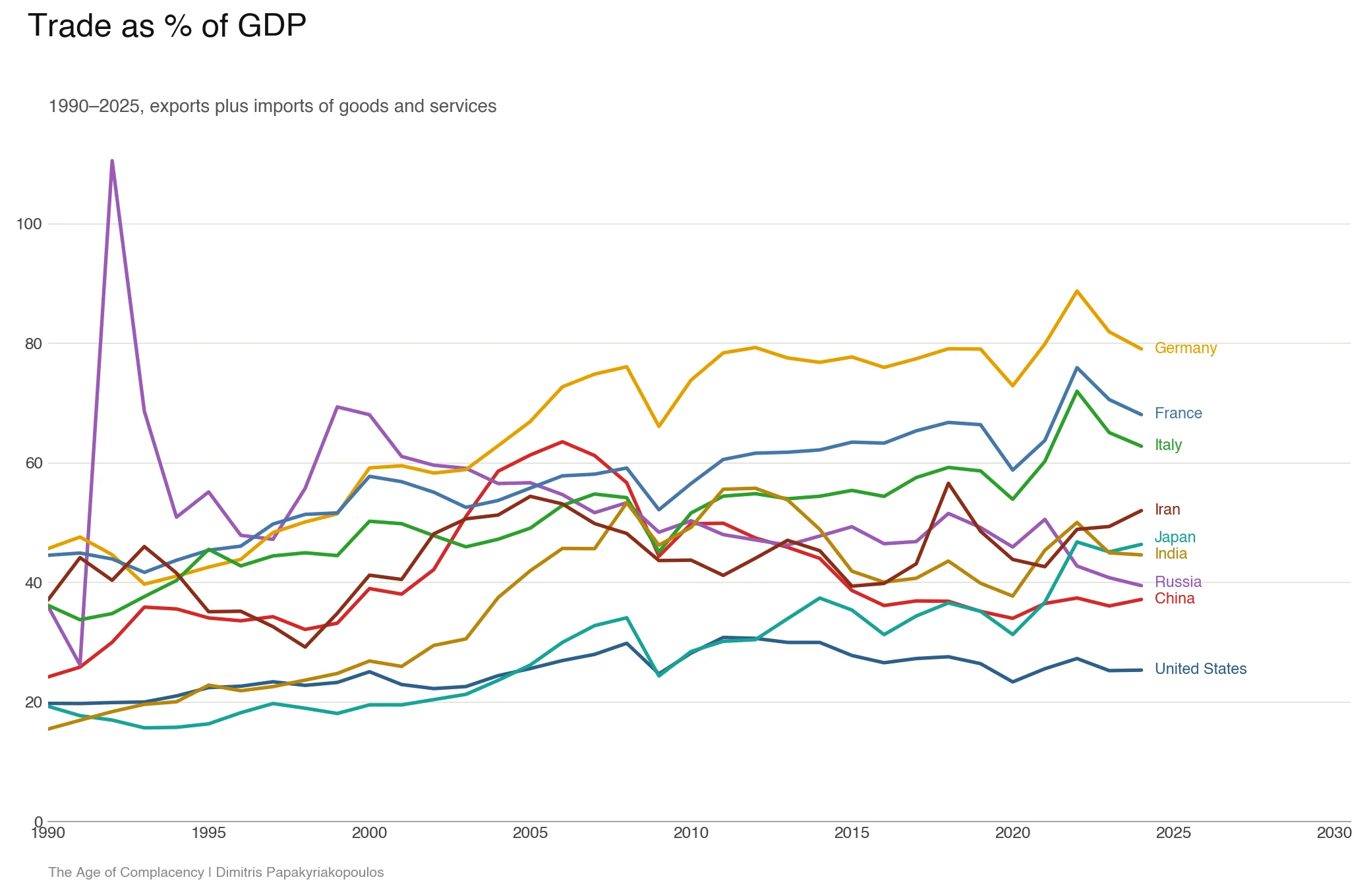
Source: Country official statistics, National Statistical Organizations and/or Central Banks; National Accounts data files, Organisation for Economic Co-operation and Development (OECD); Staff estimates, World Bank (WB).
To many observers, globalization appeared to validate the assumptions of the time. Trade expanded rapidly, economic growth accelerated, and consumers benefited from lower prices and greater access to goods. Moreover, developing nations experienced remarkable gains in prosperity and the world seemed to be moving toward deeper integration and greater stability. But more importantly, globalization appeared to provide evidence that competition itself was changing, since prosperity would encourage cooperation, and markets would achieve what diplomacy had often struggled to accomplish. Economic interdependence was expected to reduce the likelihood of conflict and nations that traded extensively with one another would have too much to lose from confrontation.
The appeal and logic of this argument is quite easy to understand. The evidence seemed compelling, and for a time the results appeared to support it. But we failed to see that this assumption contained a critical flaw. Economic integration does not eliminate geopolitical competition, but it changes its form. While many Western societies increasingly viewed globalization through the lens of efficiency, other states continued to view economic development through the lens of power. Industrial capacity, technological expertise, manufacturing capability, and control over strategic industries remained sources of national strength, even if many in the West had begun to regard them primarily as economic variables rather than geopolitical ones. A great example for this is the changing nature of the American economy.
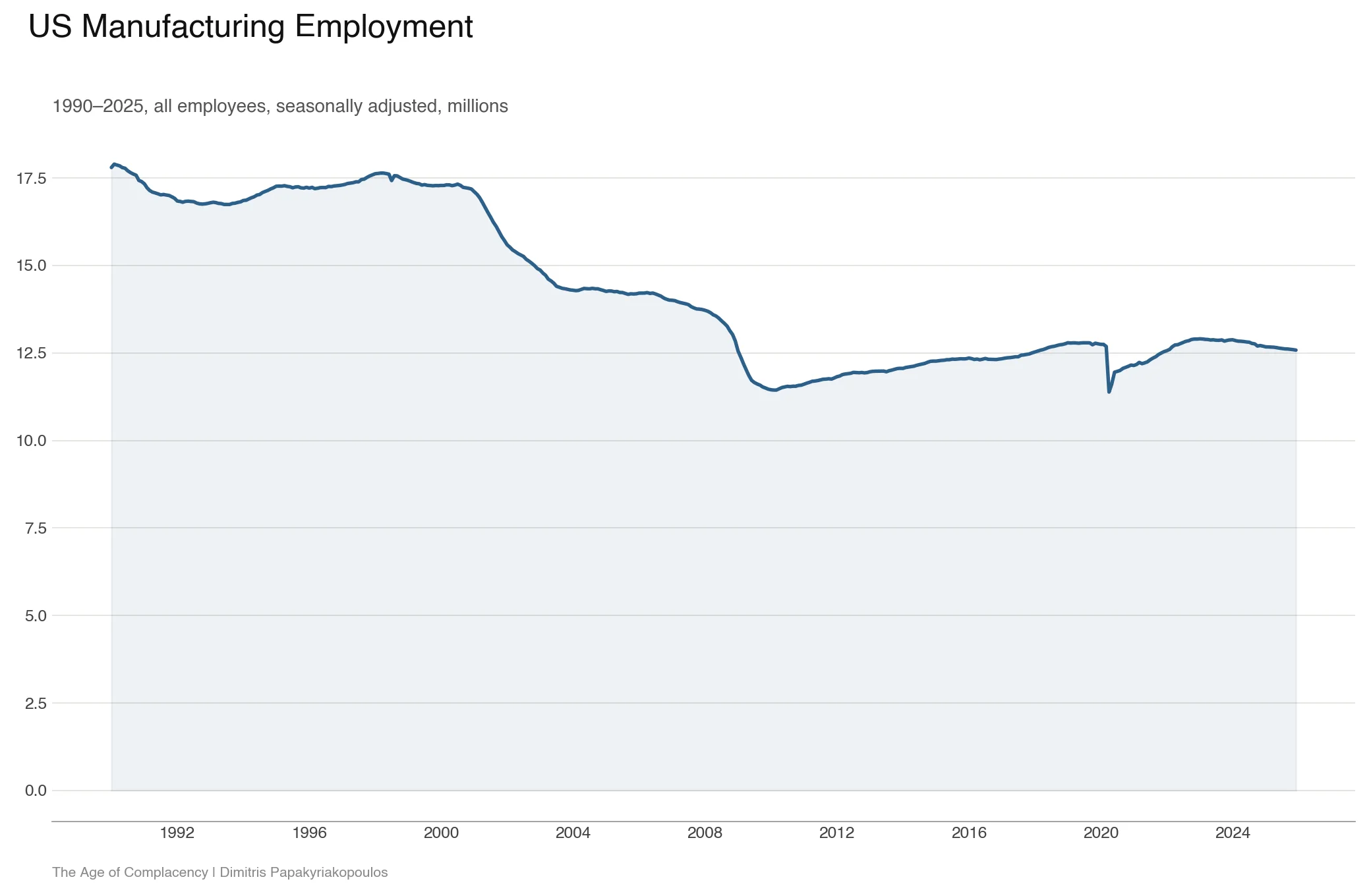
Source: FRED Graph Observations. Federal Reserve Economic Data, Federal Reserve Bank of St. Louis.
The decline in manufacturing employment in the United States was driven by multiple factors, including automation, productivity gains, and globalization and any serious analysis must acknowledge the role played by each. But regardless of the precise balance among these causes, the United States was becoming less directly connected to the industrial foundations that had underpinned much of its twentieth-century power and this transformation was often celebrated as evidence of economic progress. Advanced economies were expected to move away from manufacturing and toward services, finance, technology, and other knowledge-intensive industries. To be fair, there was some considerable truth in this perspective, as it was evident that the American economy remained innovative, dynamic, and extraordinarily productive.
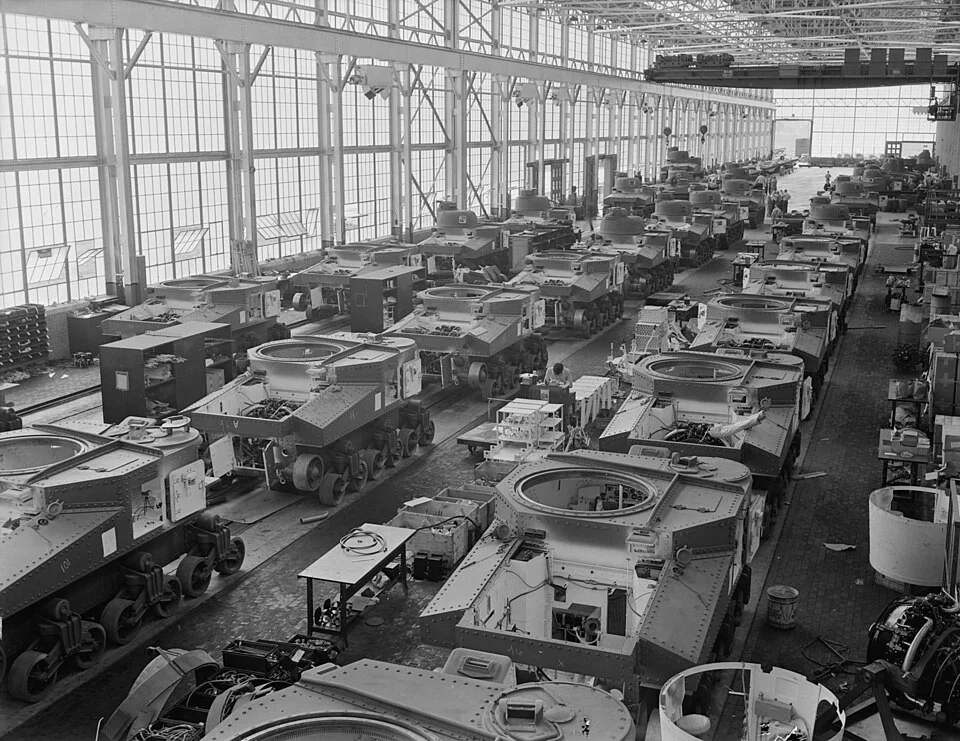
Source: United States Library of Congress’ Prints and Photographs division.
But the root of this problem starts the moment the strategic implications of industrial capacity receive less attention than its economic implications. You see, factories are more than just places where goods are produced. They are national repositories of expertise, engineering talent, supply networks, and production knowledge. Industrial ecosystems generate capabilities that extend far beyond employment figures, and they provide the foundation upon which both economic and military power are built. Once these capabilities fade away, rebuilding them can be costly, time-consuming, and in some cases extraordinarily difficult.
The irony of the period is that many of the decisions that reduced resilience appeared entirely rational when viewed in isolation. Why maintain excess production capacity if it was rarely used? Why preserve redundant supply chains when global markets offered cheaper alternatives? Why stockpile materials that might never be needed? Why sustain military capabilities designed for threats that appeared increasingly unlikely? Each decision could be justified on its own terms but taken together, however, they incrementally reshaped the strategic foundations of the Western societies.
The defining characteristic of the Great Relaxation was not weakness. The West remained extraordinarily powerful throughout this period. Its economies continued to grow, its militaries remained technologically advanced, and its institutions retained immense influence. The issue was that Western societies adapted themselves to a world in which major geopolitical competition appeared increasingly unlikely. Governments optimized for efficiency, businesses optimized for cost reduction, supply chains optimized for productivity, and political systems increasingly focused on domestic concerns. The possibility that these assumptions might one day be tested seemed unrealistic or far-fetched to policymakers in Brussels and Washington.
Unfortunately, history tends to exploit precisely those assumptions that societies stop questioning. The post-Cold War order had been built upon a particular distribution of power, which was sustained by military superiority, economic dominance, and favorable geopolitical conditions. The challenge was that many of these changes occurred subtly and were visible only when viewed over decades rather than years. During the same period that Western societies were becoming more comfortable, more efficient, and more dependent upon globalization, new centers of power were starting to emerge elsewhere. What appeared to be an age of permanent stability was, in reality, a period of transition. Beneath the surface of prosperity and integration, the foundations of a new geopolitical era were already being laid.