III. Competition Never Disappeared
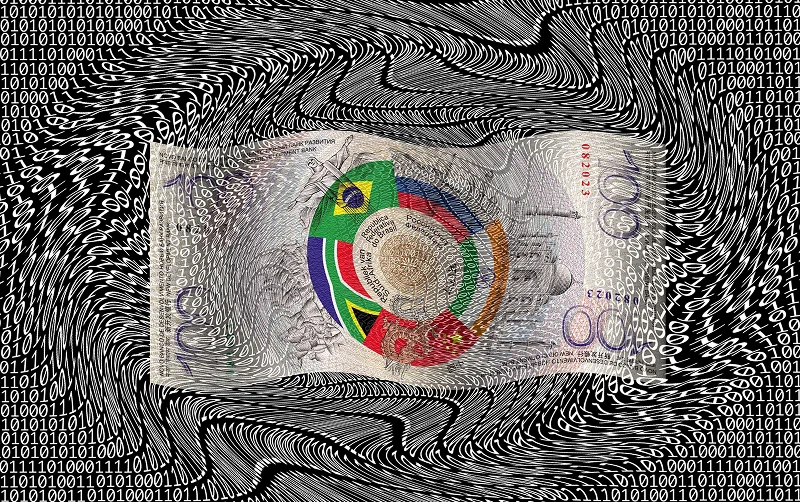
While Western governments were harvesting the peace dividend, consolidating defense industries, and reorganizing their economies around the assumptions of globalization, the rest of the world was not standing still. The same decades that witnessed the Great Relaxation in the West witnessed the accumulation of power elsewhere. New industrial centers were emerging, military capabilities were being modernized, regional ambitions were expanding, and geopolitical actors that many had regarded as peripheral to the future of international affairs were quietly positioning themselves for a different world than the one envisioned in Western capitals.
Source: iStock images.
The irony is that many of these developments occurred not in opposition to the post-Cold War order but because of it. The liberal international system generated extraordinary prosperity, accelerated technological progress, and expanded global trade to levels previously unimaginable. But while doing so, it also redistributed economic capacity, transferred industrial production, and created opportunities for ambitious states to accumulate wealth, technology, and influence on a scale that few had anticipated. The very forces that appeared to confirm the triumph of the Western model were simultaneously reshaping the global balance of power beneath the surface.
.jpg.webp)
Source: Press Statements by President of Russia and President of China.
For much of this period, these changes attracted surprisingly little attention and unfolded little by little, often concealed by the broader success of the international order itself. A new industrial park in eastern China was not viewed as a geopolitical development. A pipeline carrying natural gas into Europe was seen primarily as an economic project. The growth of Iranian influence across the Middle East appeared to be a regional concern rather than a strategic one. North Korea's pursuit of nuclear weapons was often treated as an isolated problem rather than evidence of a larger reality. Considered individually, these developments seemed manageable, but as I have stated earlier, the collective consideration of all these together revealed something far more consequential. In other words, policymakers in the West focused too much on each tree separately and failed to take a look of the boarder forest.
The return of history did not arrive in a single dramatic moment, but it emerged incrementally through a series of realizations. Initially, that globalization could strengthen rivals as well as partners. Second, that economic dependence could create vulnerability as well as prosperity. Third, that states would continue to pursue power even when doing so imposed severe economic costs. And perhaps most importantly, the realization that many of the forces that had shaped international politics for centuries had never disappeared at all.
Source: World Trade Organization (WTO).
One of the central assumptions of the post-Cold War period was that the economic integration would eventually transform geopolitical relationships. As China opened its economy and joined the global trading system, many policymakers believed that prosperity would encourage convergence with the existing international order, greater trade would produce even greater cooperation, economic development would reinforce political moderation and in general, integration would reduce rivalry.
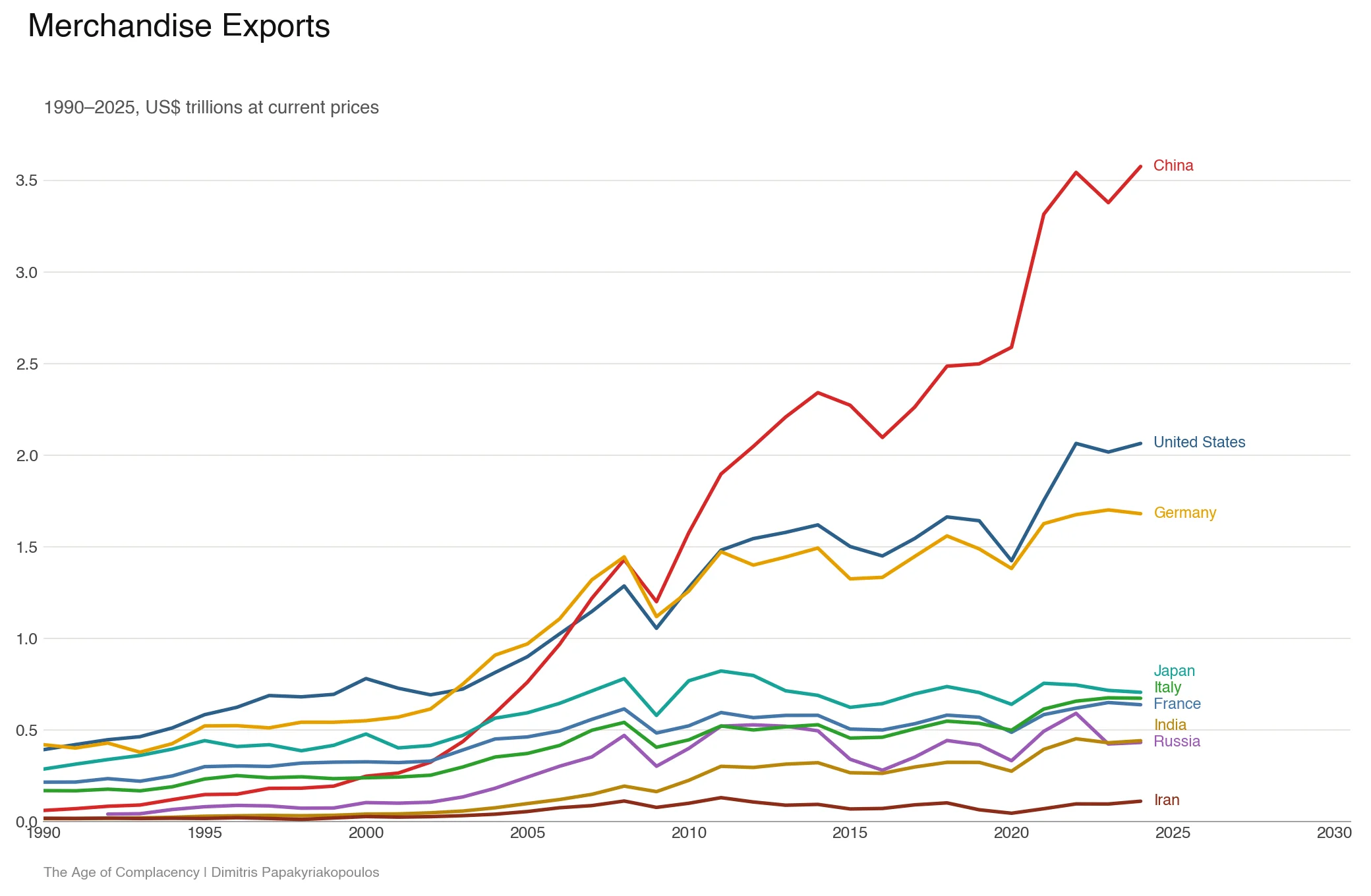
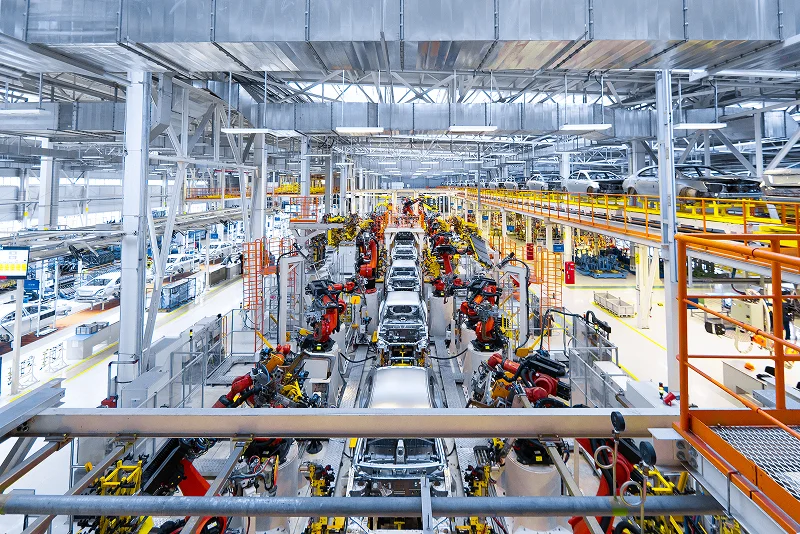
Instead, globalization ended up welcoming with open arms the creation of the industrial foundation of a future competitor. Over the following three decades, China became the manufacturing center of the global economy, as Western corporations shifted production abroad in pursuit of lower costs and greater efficiency. This started a chain reaction of developments, such as supply chains increasingly concentrating in Chinese factories and industrial capabilities accumulating at a rapid pace. The result was that China did not only become an export powerhouse, but a nation possessing vast manufacturing capacity, growing technological sophistication, and an increasingly modern military. The architects of globalization in Davos believed they were integrating China into the existing order, while in practice, they were helping build the industrial base of a state capable of challenging that order.
Source: iStock images.
If China revealed the unintended consequences of globalization, Russia revealed the limits of economic statecraft. For much of the post-Cold War era, Western policymakers grew increasingly confident in the ability of markets, sanctions, and financial pressure to influence state behavior. Economic power appeared more relevant than ever, while traditional geopolitical competition seemed increasingly constrained by interdependence. Access to global markets, international finance, advanced technologies, and investment flows was expected to provide powerful incentives for cooperation and equally powerful disincentives for confrontation. To state this clearly, the assumption was not that military power had become irrelevant, but that economic tools would increasingly shape the behavior of states in ways that reduced the likelihood of a major geopolitical conflict.
However, the invasion of Ukraine brutally exposed the limits of this thinking. Economic sanctions imposed significant costs on Russia, such as disrupted trade, restricted access to technology, constrained financial activity, and imposed substantial pressure on the Russian economy. But they failed miserably to achieve their primary objective, which was to prevent military action. More importantly, they reinforced a historically repeated lesson that states are often willing to absorb extraordinary economic costs when pursuing objectives they regard as vital to their security, identity, or strategic position. Financial power remained an important instrument of statecraft, but it proved incapable of fully replacing hard-power deterrence. So, allow me to say that the expectation that economic incentives alone could constrain geopolitical ambitions was revealed to be overly optimistic.
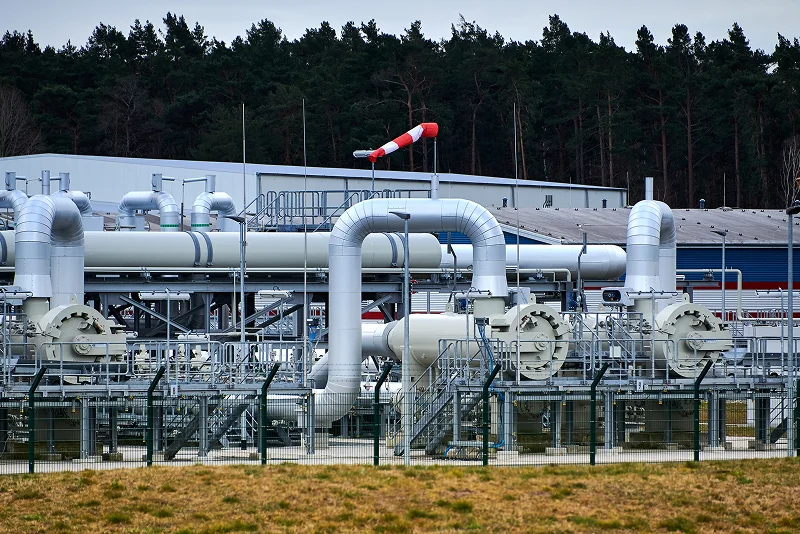
The conflict between Ukraine and Russia also exposed a vulnerability that had been quietly accumulating for some decades. In pursuit of efficiency, affordability, and reliable supplies, a big part of Europe had become increasingly dependent on Russian energy exports and a lasting mutually beneficial commercial relationship suddenly acquired strategic significance. After the start of the War, pipelines became instruments of influence and energy became a new means of leverage. The same interconnected systems that generated prosperity were proven that could also generate vulnerability and instead of eliminating power politics, globalization had simply provided states with new mechanisms through which power could be exercised.
Source: iStock images.
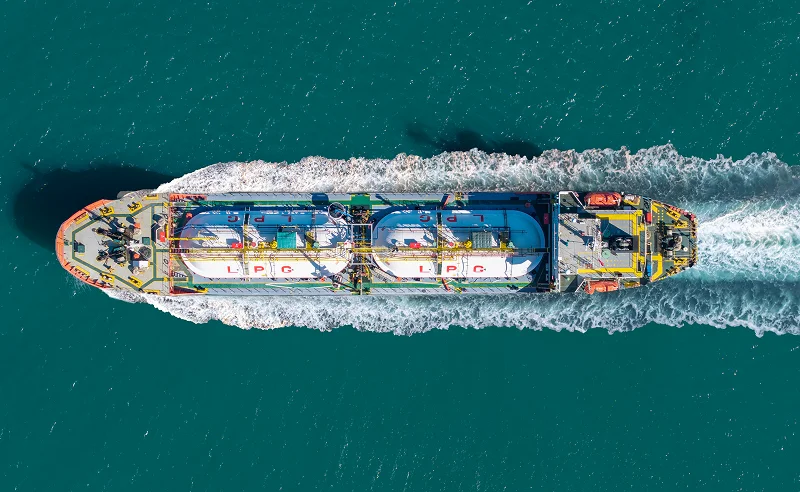
The lessons of Ukraine extended beyond sanctions, energy markets, and military deterrence. More broadly, they challenged the notion that technological progress and economic integration were steadily reducing the importance of geography itself. Perhaps the clearest reminder of this reality lies not in Europe, but in the waters of the Persian Gulf, where the Strait of Hormuz, a narrow maritime corridor only a few dozen miles wide, continues to have influence over the global economy.
Source: iStock images.
The Strait of Hormuz is a narrow maritime passage connecting the Persian Gulf to the wider world. Despite its modest size, roughly a fifth of globally traded oil passes through it. This means that a regional power such as Iran, which lacks the industrial capacity of China and the conventional military strength of the United States, possesses the ability to influence energy markets far beyond its immediate neighborhood. Past periodic tensions, military confrontations, and threats to shipping in the region have repeatedly demonstrated how actions taken by Tehran can affect energy prices, financial markets, and economic activity across the globe. The recent confrontations involving Iran, Israel, and the United States are perfect examples of the reality that instead of diminishing the importance of location, globalization has heightened it, allowing thus states that occupy key positions within international networks to project influence far beyond what their material capabilities might otherwise suggest.
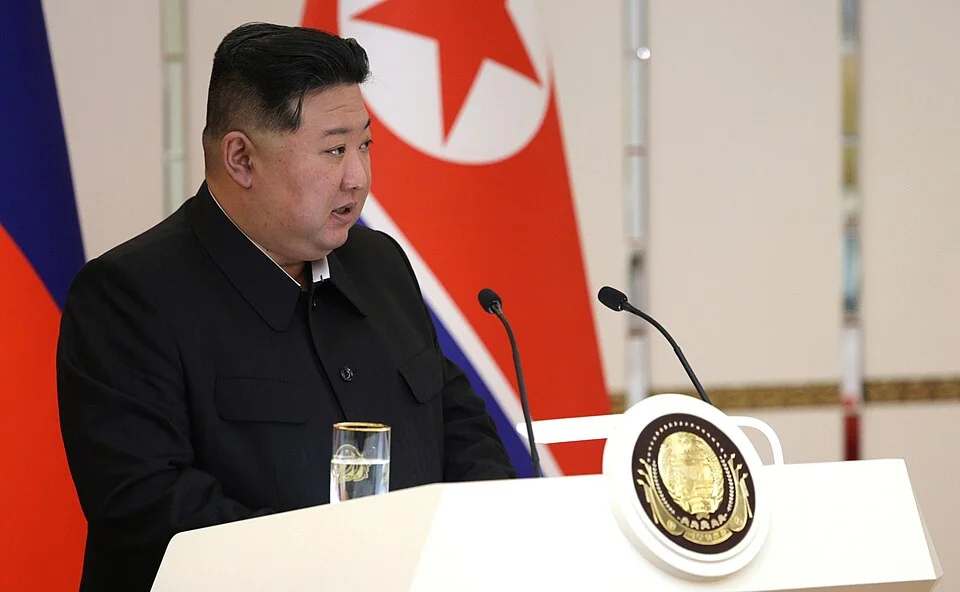
The age of globalization carried a powerful assumption that states that remained outside the international economic system would progressively become weaker, poorer, and less relevant. North Korea was widely expected to serve as a primary example of what isolation looked like in an increasingly interconnected world. But over the following decades, despite years of pressure, diplomatic isolation, and economic restrictions, North Korea not only survived but successfully developed a growing nuclear arsenal and increasingly sophisticated missile capabilities. The regime demonstrated that security concerns, ideological commitments, and regime survival can outweigh economic incentives and that hard power can be heavily resilient.
Source: Kremlin.
Even countries that were not directly challenging the Western order pointed towards a broader transformation in the global distribution of power. India represents perhaps the most important example and unlike China, Russia, Iran, or North Korea, India is not best understood as an adversary of the Western system. Its significance lies on the emergence of new centers of economic, technological, and human capital outside the traditional core of the Western world. The growing influence of Indian talent can be seen throughout the global economy, including in leadership positions at some of the world's most important technology companies with figures such as Sundar Pichai at Google, Satya Nadella at Microsoft, Arvind Krishna at IBM, and Shantanu Narayen at Adobe symbolizing a broader shift that extends far beyond individual success stories.

The clearest sign that the era of unquestioned Western dominance is ending is not that the West underestimated China, Russia, Iran, or any other individual rival. It is that it mistook a temporary condition for a permanent one, interpreting the absence of serious competition after 1991 as evidence that competition itself was disappearing, and treating the stability created by overwhelming Western dominance not as an achievement requiring continuous maintenance but as the natural state of the international system.
However, the forces that have shaped history for centuries never disappear simply because they become less visible. Industrial capacity continues to determine what nations can produce, military power continues to determine what they can defend, geography continues to determine which positions offer an advantage and which create vulnerability, and national interests continue to shape the behavior of states more reliably than ideals, institutions, or aspirations. The world continuously changes, technologies evolve, and economies become more interconnected, but the underlying logic of power remains resistant to these transformations. The rise of new challengers therefore does not mark the beginning of a new era, but the end of an illusion that reminds us that history has a habit of correcting those who mistake exceptions for rules.